
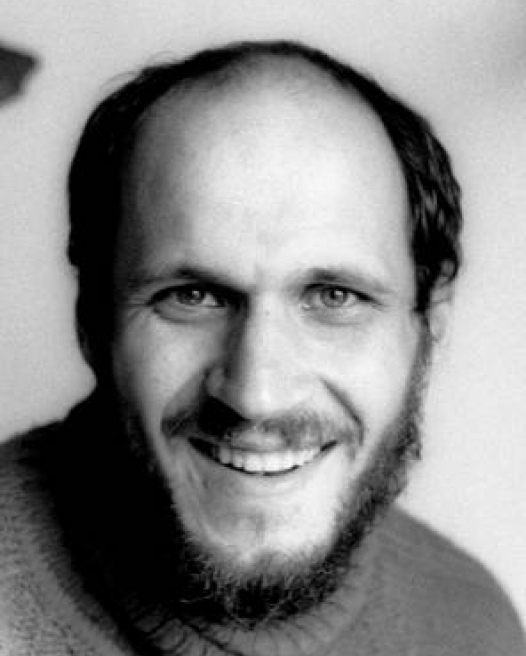
Tears of Steel: Vladimír Stehlík Meets Lubomír Krystlík
A documentary comedy about an era of high hopes and even greater disillusions, about the wild Czech journey to capitalism, about a steep rise and deep fall. Also, a film about the art of aging and the ways of dealing with the collapse of great expectations. Two old men think back to days when they have reached for the top of Czech business. Vladimír Stehlík and Lubomír Krystlík, CEO and his private adviser - they were the main players in the privatization project of the steel works Poldi Kladno in mid 1990s. They once used to be at the top, now they are living off their low old age pensions and the ex-CEO is facing a number of distress warrants. Poldi Kladno went bankrupt many years ago and the glorious past remains alive only in memories.
Red Cowboy
Clyde Lee Conrad was an officer in the U.S. Army in West Germany, where he was tasked with protecting the top secret documents related to the military plans in case of a war with the Soviet bloc. He was recruited in 1975 by the Hungarian Military Strategic Intelligence Service (MNVK/2) and later in 1980 he offered his services also to the Czech Intelligence Service. He caused the biggest leak of the top secret NATO documents in its history: detailed descriptions of nuclear weapons, plans for movement of troops, tanks, aircraft… More than 30 000 documents. Documents threw Hungarian and Czech agents - all the way up to the KGB. In the film we follow Conrad's work for the Czechoslovak secret police and counterintelligence procedure against him. Conrad was sentenced to life imprisonment in 1990.
Chief Justice Ferdinand Schuth said that Conrad enabled the real possibility that “If war had broken out between NATO and the Warsaw Pact, the West would have faced certain defeat. NATO would have quickly been forced to choose between capitulation or the use of nuclear weapons on German territory.”
Chief Justice Ferdinand Schuth said that Conrad enabled the real possibility that “If war had broken out between NATO and the Warsaw Pact, the West would have faced certain defeat. NATO would have quickly been forced to choose between capitulation or the use of nuclear weapons on German territory.”
Here and Now / Peace with the Brain
A portrait of the minds of three Czech and Slovak scientists (material physicist, cognitive scientist and researcher in the field of robotics), who are currently engaged in meditation. A film about the limits of knowledge achieved through science and the place where it meets with subjective introspection. A detailed analysis of time, space and concentration using documentary and slightly experimental methods.
Happy Farmers
„Happy Farmers“ is a short documentary film about Happy Farm, an organic vegetable farm in southern France. The farm is a part of a buddhistic monastery called Plum Village, established by Thich Nhat Hanh, a zen master originally from Vietnam. Lay people from the monastery started the farm in 2012, on a clay ground, but thanks to their dedication (and a lot of compost), the farm is flourishing every year more and more. But is the life in monastery a real life?
Film was shot in September 2016 by a small group of filmmakers from Czech Republic, now in crowdfunding campaign in order to raise funds for postproduction. The premiere is planned in spring 2018.
Film was shot in September 2016 by a small group of filmmakers from Czech Republic, now in crowdfunding campaign in order to raise funds for postproduction. The premiere is planned in spring 2018.
Valley of the Heart
“My father was a priest, my grandfather was a priest, my brother is a priest, I want something different.”
Through a recruitment program for workers from the developing world, young Purna finds himself in the Czech Republic. He knows nothing of the country, but hopes for a brighter future than the one awaiting him in Nepal, where corruption and nepotism rule. He dreams of earning money and building a life free from the strict rules of his remote Himalayan community—still bound to ancient cycles of nature and religion.
In Europe, he longs for connection, immediately seeking a local girl to ease his loneliness and perhaps become his life partner. But he soon confronts the harsh reality of his social standing, his confusion with a society driven by consumption, fleeting relationships, and the unraveling of family bonds.
When Purna returns to Nepal for a visit, his mother pleads with him to provide not only financial security for her old age, but also to marry a Nepali bride according to tradition. She enlists relatives and friends to find the “right” girl—one who belongs to the same highest ritual caste of Brahmins.
Torn between two worlds Purna abandons his inner rebellion. In the face of modern uncertainty, he begins to long for the stability of his community’s old rules—even if it means an arranged marriage within his caste.
And yet, despite this pull back to tradition, he cannot imagine giving up Europe.
Through a recruitment program for workers from the developing world, young Purna finds himself in the Czech Republic. He knows nothing of the country, but hopes for a brighter future than the one awaiting him in Nepal, where corruption and nepotism rule. He dreams of earning money and building a life free from the strict rules of his remote Himalayan community—still bound to ancient cycles of nature and religion.
In Europe, he longs for connection, immediately seeking a local girl to ease his loneliness and perhaps become his life partner. But he soon confronts the harsh reality of his social standing, his confusion with a society driven by consumption, fleeting relationships, and the unraveling of family bonds.
When Purna returns to Nepal for a visit, his mother pleads with him to provide not only financial security for her old age, but also to marry a Nepali bride according to tradition. She enlists relatives and friends to find the “right” girl—one who belongs to the same highest ritual caste of Brahmins.
Torn between two worlds Purna abandons his inner rebellion. In the face of modern uncertainty, he begins to long for the stability of his community’s old rules—even if it means an arranged marriage within his caste.
And yet, despite this pull back to tradition, he cannot imagine giving up Europe.
Rojava, my love
The film follows Miroslav and Markéta Všelichovi, who met in the Kurdish autonomous region of Rojava. Miroslav joined the Kurdish YPG militia in the fight against ISIS, while Markéta worked there as a humanitarian volunteer. They became a couple and were later arrested in Turkey and imprisoned for their involvement with the Kurdish forces.
After their release and return to Czechia, they try to rebuild their lives. They start a family and search for stability they never had. Though grateful for their daughters, they carry psychological scars from prison. Mirek endured solitary confinement, and unresolved questions about responsibility for their arrest create tension between them.
Five years later, they live in a damaged house in northern Bohemia, slowly rebuilding it. The endless work consumes their time and replaces the ideals that once defined them. Mirek considers returning to military life, longing for purpose and recognition. Markéta dreams of humanitarian work but remains grounded in motherhood.
Memories of Rojava persist as a place where they felt respected and connected. In Czechia they often feel misunderstood. They travel to Iraq hoping to reach Rojava, only to realize that even if they return, it can no longer be their future. The film closely observes their struggle to accept the loss of a place that shaped their love and sense of belonging.
After their release and return to Czechia, they try to rebuild their lives. They start a family and search for stability they never had. Though grateful for their daughters, they carry psychological scars from prison. Mirek endured solitary confinement, and unresolved questions about responsibility for their arrest create tension between them.
Five years later, they live in a damaged house in northern Bohemia, slowly rebuilding it. The endless work consumes their time and replaces the ideals that once defined them. Mirek considers returning to military life, longing for purpose and recognition. Markéta dreams of humanitarian work but remains grounded in motherhood.
Memories of Rojava persist as a place where they felt respected and connected. In Czechia they often feel misunderstood. They travel to Iraq hoping to reach Rojava, only to realize that even if they return, it can no longer be their future. The film closely observes their struggle to accept the loss of a place that shaped their love and sense of belonging.