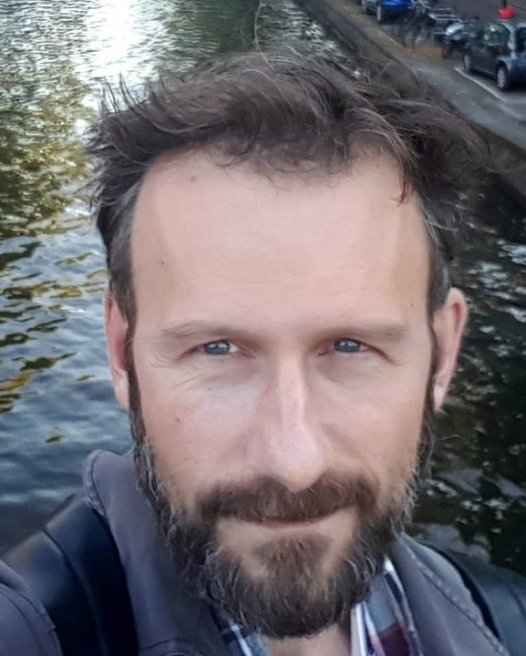
Valentin, Son of Europe
Valentin is 25 and currently lives in Paris. He grew up in Bucharest before moving to Belgium as a teenager. He is one of the protagonists of the documentary Gara de Nord: copii per strada shot by Antonio Martino in 2005. At the time, Romania was in a state of chaos, Ceausescu's long dictatorship had just come to a violent end. Bucharest was full of abandoned kids. To escape the cold, many would hide in the tunnels of the sewers near the main railway station, the Gara de Nord. All of them forgot their troubles by inhaling Aurolac, a noxious paint, from a plastic bag they always carried with them. Valentin was one of them back then.
His life changed when, at the age of fourteen, he was adopted by a Belgian couple of Algerian origin, who, after some initial documents, managed to gain his affection and give him a normal life. Later, Valentin saw the documentary by chance on YouTube, and saw himself as a street kid. He contacted Antonio via Facebook and then he decided to go back to Romania. In the past, he had already gone back to look for his two brothers which he helped move to France. But he still needs to find his mother whom he hasn't seen since he was little and his little sister. Then there are his friends from the sewers and in particular, Marcel, who was a bit older, with whom he spent so much time. Above all, his daughter Eliza, whom he had with a Romanian woman, an ex-street kid. They met on Facebook, she lives in Italy with their daughter, accusing Valentin of not supporting them.
During the trip, the search, we see footage of the 2005 documentary and archival footage of Romania, like flashbacks from Valentin's memory. Valentin is accompanied by Antonio's gaze and by the silent presence of his younger brother Constantin, who is also anxious to find the bits of his life he lost along the road, to put together the pieces of an old family photo, torn up a long time ago.
His life changed when, at the age of fourteen, he was adopted by a Belgian couple of Algerian origin, who, after some initial documents, managed to gain his affection and give him a normal life. Later, Valentin saw the documentary by chance on YouTube, and saw himself as a street kid. He contacted Antonio via Facebook and then he decided to go back to Romania. In the past, he had already gone back to look for his two brothers which he helped move to France. But he still needs to find his mother whom he hasn't seen since he was little and his little sister. Then there are his friends from the sewers and in particular, Marcel, who was a bit older, with whom he spent so much time. Above all, his daughter Eliza, whom he had with a Romanian woman, an ex-street kid. They met on Facebook, she lives in Italy with their daughter, accusing Valentin of not supporting them.
During the trip, the search, we see footage of the 2005 documentary and archival footage of Romania, like flashbacks from Valentin's memory. Valentin is accompanied by Antonio's gaze and by the silent presence of his younger brother Constantin, who is also anxious to find the bits of his life he lost along the road, to put together the pieces of an old family photo, torn up a long time ago.
Stitches of Freedom
In the Western world, the late 1960s is an era of open minds, sexual freedom, anti-war sentiments, civil rights urgency and exploding creative spirit. Pockets of freedom emerge behind the Iron Curtain, too. In 1968, the short-lived Prague Spring brings a gulp of fresh air to Czechoslovakia, with people attempting to exert control over their lives and reform the Communist system. In the Soviet Union, the free-spirited and colourfully-clad flower children from various Soviet republics come to Riga to listen to Western music and escape the drabness imposed by the regime led by morose men in ill-fitting suits.
Inna, a young transgender person in Soviet Russia, can no longer suppress the inner imperative to free themselves from the foreign body in which they feel imprisoned, and on their quest for freedom, they set off for Riga. A famous and ambitious Latvian surgeon with extensive connections within the Soviet elite, after reading Inna's desperate letter addressed to him, takes on the unprecedented series of operations to change their gender and help "correct nature’s mistake," thereby creating Innokenty in place of Inna.
The film, using unique archive footage and creative reenactments, follows the stages of Inna's transformation – their journey to Riga, the surgeon's doubts and his sources of inspiration, the sexually-charged “tests” of Inna’s femininity, preparation for the series of operations, and the operations unfolding.
The film's narrator is Innokenty, who has since reached old age and, feeling the end of their life approaching, turns to their "creator" in another letter, seeking support in the final transformations of their life. They find themselves back where they started – a regime that does not recognize an individual’s freedom to be themselves. The bond between Innokenty and the surgeon has a lasting pull, hence the need for a final letter. This bond has survived changes in government, family and society, and, ultimately, the surgeon’s death.
Inna, a young transgender person in Soviet Russia, can no longer suppress the inner imperative to free themselves from the foreign body in which they feel imprisoned, and on their quest for freedom, they set off for Riga. A famous and ambitious Latvian surgeon with extensive connections within the Soviet elite, after reading Inna's desperate letter addressed to him, takes on the unprecedented series of operations to change their gender and help "correct nature’s mistake," thereby creating Innokenty in place of Inna.
The film, using unique archive footage and creative reenactments, follows the stages of Inna's transformation – their journey to Riga, the surgeon's doubts and his sources of inspiration, the sexually-charged “tests” of Inna’s femininity, preparation for the series of operations, and the operations unfolding.
The film's narrator is Innokenty, who has since reached old age and, feeling the end of their life approaching, turns to their "creator" in another letter, seeking support in the final transformations of their life. They find themselves back where they started – a regime that does not recognize an individual’s freedom to be themselves. The bond between Innokenty and the surgeon has a lasting pull, hence the need for a final letter. This bond has survived changes in government, family and society, and, ultimately, the surgeon’s death.