
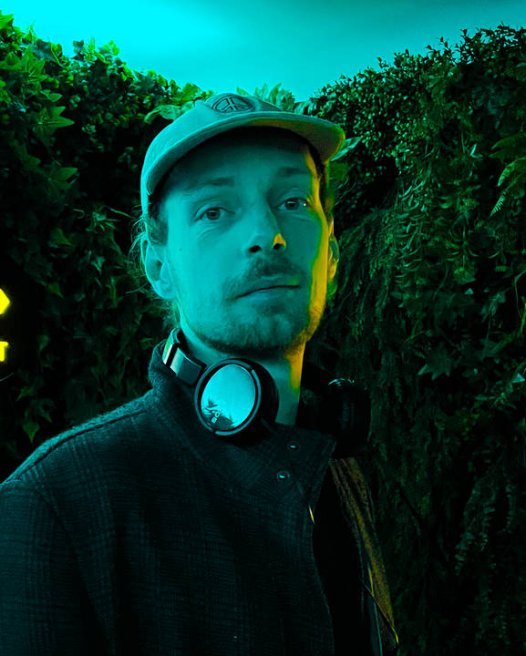
Always Far Away
When a person grows up in a marginalized community of traveling circus performers, the important period of adolescence in which one's personal identity is formed can be difficult. Even a small child is already seen as a professional athlete, who is expected to perform challenging tricks at great heights or with flying knives. This is the specific reality of our protagonists - Vojta and his brothers Nikolas and Venca.
The nomadic way of life of the Lánik family also determines their relationships. Since they are in a different city every week, they see a bit of the world, but friends come and go. Long-term deeper relationships are impossible to maintain, but circus performers try anyway, at least through social networks. Vojta is a bit of a celebrity on those, but he honestly doesn't have much to talk to. Part of his growing up is getting used to involuntary solitude.
One of the few constant things in Vojta’s circus life is his immediate family, to which he is, therefore, all the more attached. In an effort to please his parents, Vojta initially submits to their will and trains as they command him.
Tradition is a burden that is sold from generation to generation. The highest imperative is: You have to play! Over the years, however, Vojta gradually defines himself in relation to his parents. He doesn't want to end up as a provincial artist, in fact, the whole nomadic way of life is gradually starting to oppose him.
We follow the process of creating Vojta's multi-layered identity. His maturation into a young man, artist, or circus performer will take place during the acquisition of new experiences and knowledge, but also under the influence of demanding trainings that force artists to go to the limit of their physical abilities. The film will be a reflection on to what extent a person's environment determines them, and to what extent they can be happy in the role they play for others.
The nomadic way of life of the Lánik family also determines their relationships. Since they are in a different city every week, they see a bit of the world, but friends come and go. Long-term deeper relationships are impossible to maintain, but circus performers try anyway, at least through social networks. Vojta is a bit of a celebrity on those, but he honestly doesn't have much to talk to. Part of his growing up is getting used to involuntary solitude.
One of the few constant things in Vojta’s circus life is his immediate family, to which he is, therefore, all the more attached. In an effort to please his parents, Vojta initially submits to their will and trains as they command him.
Tradition is a burden that is sold from generation to generation. The highest imperative is: You have to play! Over the years, however, Vojta gradually defines himself in relation to his parents. He doesn't want to end up as a provincial artist, in fact, the whole nomadic way of life is gradually starting to oppose him.
We follow the process of creating Vojta's multi-layered identity. His maturation into a young man, artist, or circus performer will take place during the acquisition of new experiences and knowledge, but also under the influence of demanding trainings that force artists to go to the limit of their physical abilities. The film will be a reflection on to what extent a person's environment determines them, and to what extent they can be happy in the role they play for others.
Children of the Moon Land
A group of six Romani children from Jelšava spend their days outside, where they created their own safe space. They play among the dilapidated buildings and in noxious magnesite dust that floats in the air. They build their forts and chase each other. They no longer go swimming to the local lake like they used to. The water is cloudy and a dead bird lies on the shore. They wonder what happened to it. When they dip their hands and feet in the water, rashes appear on their skin. They agree that the water is poisoned. After school, they sneak through abandoned places where adults do not interfere. They meet at an abandoned train station, where they sit on benches and talk about where they would like to go. Everyone agrees that they would like to live somewhere else. The magnesite mines turned their environment into a moonscape and the situation grows more serious by the day. The children’s households plagued by existential problems are holding them back, anchoring them in their hometown. However, Karolína(14), Alex(14), Kevin(13), Aleš(12), Kiara(13) and little Matias(9) refuse to accept a hopeless future. When they are together they feel like they can achieve anything. For them, their imagination and friendship are their refuge, following their dreams is an act of resistance. However, a time is coming that will further test the children’s bond of fellowship.